
ADVERTISEMENT
You walk into your kitchen, coffee in hand, ready to start your day—only to find a sticky, greasy film on your cabinet doors. How? You haven’t deep-fried anything in months!
The truth is, grease doesn’t need a deep fryer to invade your kitchen. Everyday cooking releases microscopic oil particles into the air that settle on every surface, especially your cabinets. When mixed with dust, it creates that stubborn, sticky grime.
But don’t worry—banishing grease doesn’t require harsh chemicals or a full-day scrubathon. Here’s your simple, natural guide to clean cabinets and a fresher kitchen.
Part 1: Prevention – Stop Grease Before It Starts
You can’t eliminate kitchen grease entirely, but you can slow it down dramatically with a few easy habits.
-
🟢 Use Your Vent Fan: Turn it on every time you cook, not just when you see smoke. It’s your first line of defense.
-
🟢 Cook with Lids: Using lids on pots and pans contains splatter and reduces airborne oil.
-
🟢 Wipe Surfaces Daily: A quick wipe of your stovetop and backsplash after cooking prevents grease from spreading.
-
🟢 Mind the Heat: Cooking over excessively high heat creates more oil vapor. A gentle simmer often works just as well.
Part 2: The Natural Cleaning Arsenal – What to Use
Forget harsh chemical degreasers that can damage finishes. These natural staples are all you need:
| Cleaner | Best For | How to Use |
|---|---|---|
| White Vinegar & Water | All-purpose degreasing | Mix 1:1 in a spray bottle. Cuts grease and disinfects. |
| Baking Soda Paste | Stubborn, sticky spots | Mix baking soda with a little water. Perfect for gunk around handles. |
| Castile Soap & Water | Gentle, all-over cleaning | A few drops in warm water is safe for all finishes. |
| Lemon Essential Oil | Cutting grease + fresh scent | Add a few drops to your water for a powerful, natural clean. |
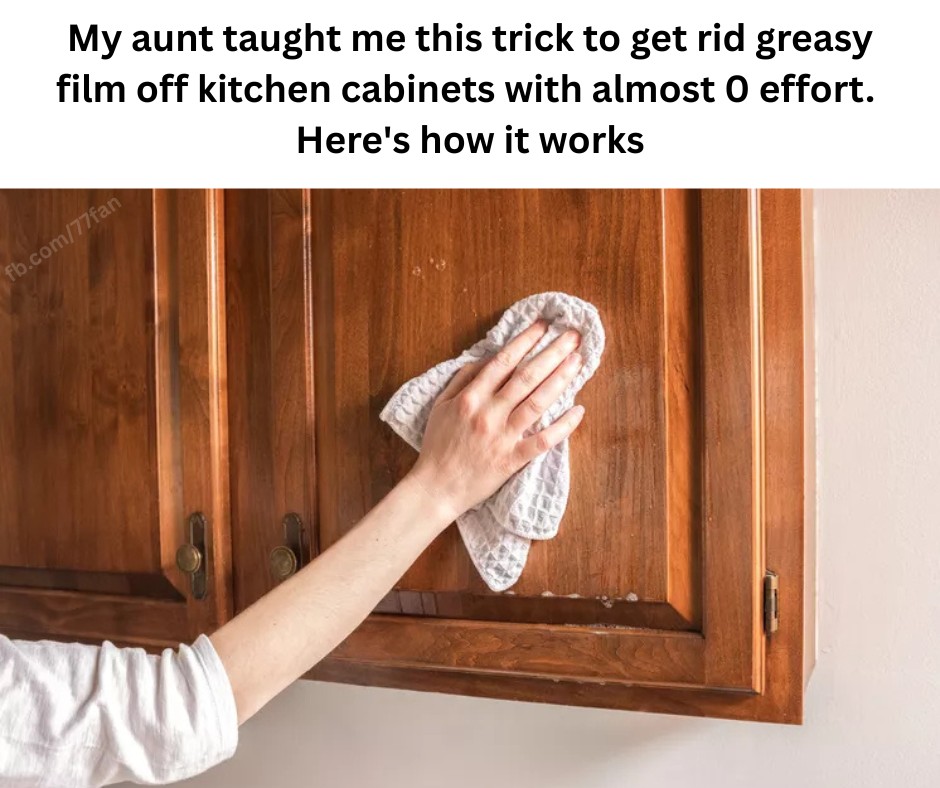
🛑 Pro Tip for Wood Cabinets: To prevent water damage, spray your cleaner onto a cloth, not directly onto the wood. Always wipe in the direction of the grain.
ADVERTISEMENT
