
ADVERTISEMENT
The Truth About Other Sleeping Positions
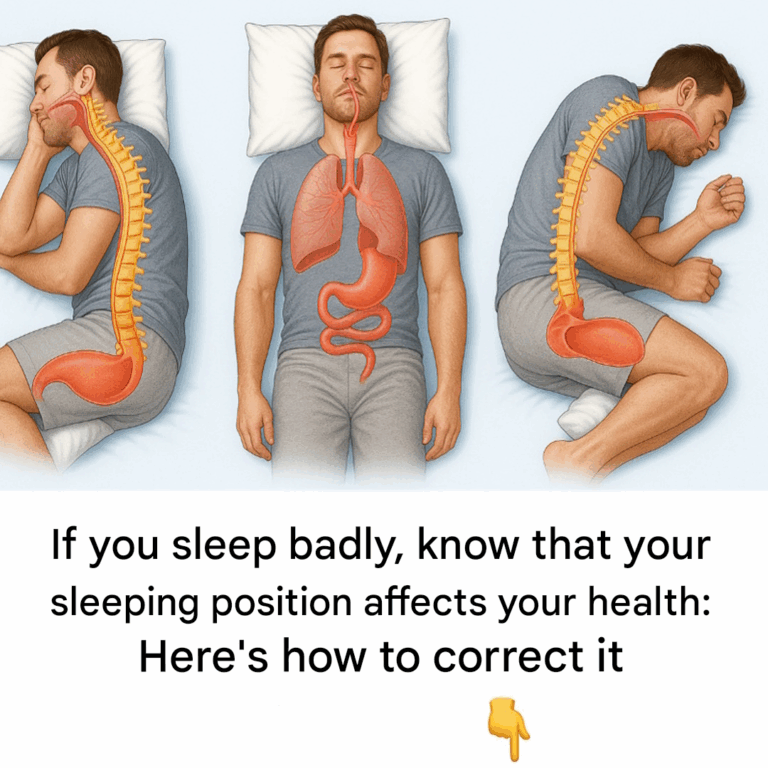
On your back: Ideal for spinal alignment, but problematic if you suffer from snoring or sleep apnea. This position can reduce oxygen intake and impair deep sleep quality.
On your stomach: The least recommended option. It twists the neck, compresses digestive organs, and restricts breathing — a recipe for morning stiffness and fatigue.
On your right side: Less harmful than lying face down, but it can worsen acid reflux and place extra strain on the liver.
Why Age Matters
For infants, the supine position (on the back) remains the official recommendation to prevent SIDS (Sudden Infant Death Syndrome).
For adults, especially after age 60, the situation changes: the risk of sleep apnea increases significantly — meaning sleeping on your back becomes a position to avoid.
Words from Experience
Sophie, 36, suffered from postpartum acid reflux for months. Medication offered only temporary relief, but simply changing her sleeping position radically improved her comfort at night.
Marc, 59, struggled with chronic fatigue until being diagnosed with sleep apnea. Adopting a supportive pillow and adjusting his sleeping posture reduced his breathing interruptions by more than two-thirds.
5 Common Myths About Sleeping Positions
ADVERTISEMENT
ADVERTISEMENT
